
Ghost projects in freelancing are engagements where a client initiates work, then stops communicating, leaving the freelancer with incomplete work and unpaid time. This is not a rare edge case. 60% of freelance proposals receive no response at all, making ghosting one of the most common income threats freelancers face. Understanding what are ghost projects in freelancing, why they happen, and how to prevent them is the difference between a stable freelance business and a cycle of wasted effort. The standard industry term for this pattern is “client ghosting,” and it covers everything from unanswered proposals to abandoned mid-project work to unpaid invoices after delivery.
What are ghost projects in freelancing?
A ghost project is any freelance engagement that starts with client interest but ends in silence. The client may have posted a job, exchanged messages, or even signed a contract, then simply stopped responding. Freelancers lose not just payment but also the time they could have spent on paying clients.
Ghost projects fall into three distinct categories. Proposal ghosting happens when a client reviews your bid and never replies. Mid-project ghosting occurs when a client stops responding after work has already begun. Post-delivery ghosting is the most financially damaging form, where a client disappears after receiving the finished work and refuses to approve or pay.

Ghosting often reflects client avoidance of difficult conversations rather than any failure on the freelancer’s part. Clients ghost to sidestep uncomfortable topics like budget cuts, internal project cancellations, or simply choosing a different freelancer. Recognizing this removes the personal sting and lets you treat ghosting as a business problem with a business solution.
Why do clients ghost freelancers?
The most common cause of ghosting is a client who never had a firm commitment to begin with. Clients often post projects while still in the research phase, collecting bids without any real intention to hire immediately. When internal priorities shift, the project dies quietly and the freelancer hears nothing.
Several structural factors make ghosting more likely:
-
Unclear project scope. When a client cannot define what “done” looks like, the project loses momentum fast.
-
Multiple decision-makers. Accountability gaps form when no single person owns the hiring decision.
-
No signed contract. Without a formal agreement, clients feel no obligation to communicate a change of plans.
-
Budget uncertainty. Clients who have not secured internal approval often disappear once they realize the cost.
-
Scope creep fear. Clients who sense a project is growing beyond their budget sometimes vanish rather than renegotiate.
Undefined milestones and unclear approval criteria increase ghosting risk by creating structural vacuums where neither party knows who should act next. That ambiguity gives clients a psychological exit route. The sunk cost fallacy also plays a role: a client who has already spent time on a project may abandon it rather than admit the scope was wrong from the start.
Pro Tip: Before sending any proposal, ask the client one clarifying question about their deadline or budget. A client who answers promptly is far more likely to follow through than one who ignores a direct question.
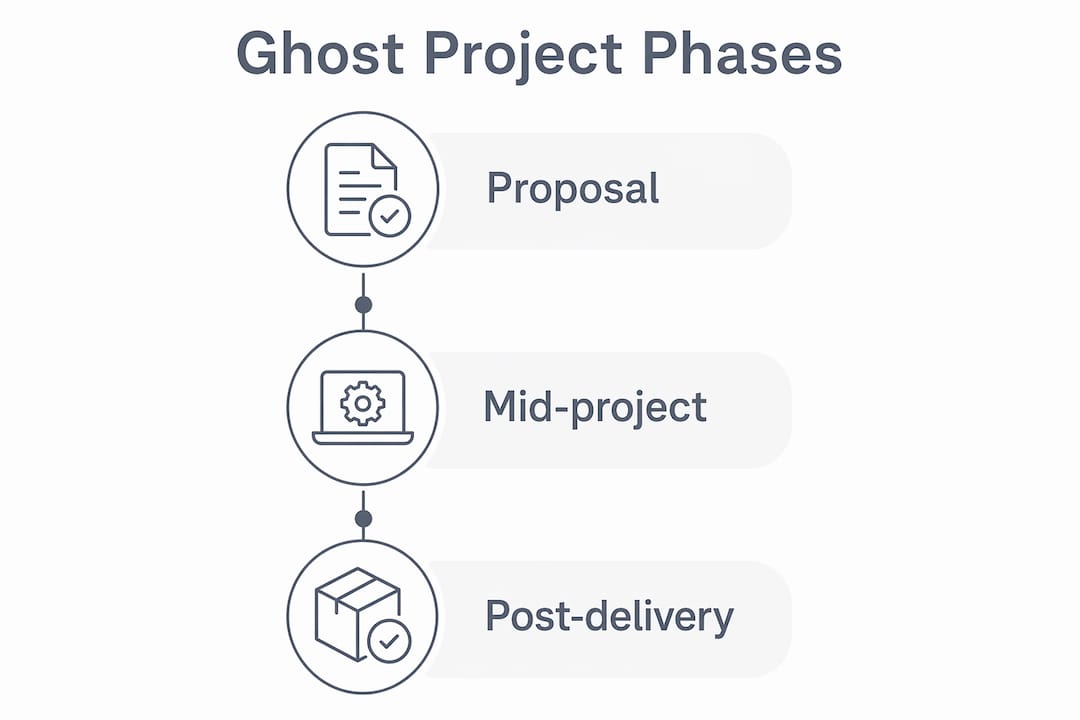
What are the three types of ghosting freelancers face?
Understanding the phase where ghosting occurs tells you exactly how to respond. Each type carries different financial stakes and requires a different approach.
Proposal ghosting
Proposal ghosting is the most common form, affecting the majority of freelance bids. The client posts a project, receives proposals, and then goes silent. No rejection, no feedback, no hire. This form costs you time spent writing bids but no actual project work.
Mid-project ghosting
Mid-project ghosting is more damaging. The client approves your proposal, work begins, and then communication stops. You are left holding partially completed work with no clear path to payment. 63% of project managers identify non-responsiveness as the primary indicator of catastrophic project failure. That statistic shows mid-project silence is not just frustrating; it is a reliable warning sign that the project will not recover without direct intervention.
Post-delivery ghosting
Post-delivery ghosting targets your payment directly. The client receives finished work and then disappears before approving or paying. This is the phase where a structured escalation timeline matters most.
| Ghosting phase | When it happens | Primary risk |
|---|---|---|
| Proposal ghosting | After bid submission | Lost bidding time |
| Mid-project ghosting | During active work | Unpaid partial work |
| Post-delivery ghosting | After work is delivered | Unpaid full invoice |
A structured escalation path for post-delivery ghosting works as follows: send a friendly reminder at 3 days, a firm follow-up at 10 days, a formal demand letter at 21 days, and file a small claims action by 60 days if needed. Each step escalates the seriousness of the communication without burning the relationship prematurely.
Pro Tip: Keep every client message in writing, even if you spoke by phone. Send a follow-up email summarizing what was discussed. That paper trail is your strongest asset if a dispute reaches small claims court.
How do you prevent ghost projects before they start?
Prevention is the highest-return activity a freelancer can do. The goal is to filter out low-commitment clients before you invest significant time or work.
-
Require a signed contract before starting any work. A contract with explicit response-time clauses, termination conditions, and kill fee clauses of around 25% of remaining project value protects you if a client abandons mid-project. Clients who refuse to sign a contract are telling you something important.
-
Collect an upfront deposit. A deposit of 25–50% of the total project fee filters out clients who are not serious. A client who pays upfront has skin in the game.
-
Define a “Definition of Done” for every milestone. Clear project milestones with granular, measurable deliverables reduce ambiguity and client disengagement risk. Vague deliverables give clients room to stall indefinitely.
-
Set communication expectations in writing. Specify in your contract that a client who does not respond within a set number of business days triggers a project pause or kill fee.
-
Build a double pipeline. Maintaining twice the number of potential leads than you need at any given time keeps your income stable even when one client ghosts. A single-client dependency turns every ghost project into a financial crisis.
The double pipeline approach is the most underused protection strategy in freelancing. Most freelancers stop prospecting once they land a project. That is exactly when ghosting risk peaks, because you have no backup if that client disappears.
Pro Tip: Add a simple line to every contract: “If client communication lapses for more than 7 business days without prior notice, the project enters a paid hold status and resumes only upon receipt of a re-engagement fee.” This single clause changes client behavior immediately.
How do you handle a ghost project once it happens?
When a client goes silent, the first and most important step is to stop all work immediately. Immediate suspension of work limits your losses and strengthens your legal position if the situation escalates. Continuing to work without client confirmation only deepens the financial hole.
Follow this escalation sequence:
-
Day 1 of silence: Send a brief, friendly check-in. Keep the tone neutral. Ask if they need anything or if priorities have shifted.
-
Day 3: Send a second message referencing your contract terms and noting that work is paused pending their response.
-
Day 10: Send a firm written follow-up that names the outstanding payment or approval and sets a clear deadline for response.
-
Day 21: Issue a formal demand letter. This can be a simple written notice stating the amount owed and the consequences of non-payment.
-
Day 60: File a small claims action if the amount justifies it, or write off the loss and document it as a client qualification failure.
If a client returns after a long silence, charge a re-engagement fee before restarting work. This fee compensates you for the disruption and tests whether the client is genuinely committed this time. Clients who balk at a re-engagement fee after ghosting you are likely to ghost again.
Document every communication attempt with timestamps. This documentation is your primary evidence in any dispute, whether through a freelance platform’s resolution center or a small claims court.
Pro Tip: Set a personal rule: three unanswered messages over 10 days means the project is officially dead. Close it in your records, stop emotional investment, and redirect that energy to your pipeline.
Key Takeaways
Ghost projects are a structural business risk in freelancing, and the freelancers who manage them best treat every ghosting incident as data to improve their client qualification process.
| Point | Details |
|---|---|
| Ghost projects defined | Engagements where clients initiate work then stop communicating, leaving freelancers unpaid. |
| Three ghosting phases | Proposal, mid-project, and post-delivery ghosting each require a different response strategy. |
| Contracts prevent losses | Kill fee clauses and response-time terms legally protect freelancers before ghosting occurs. |
| Double pipeline is critical | Maintaining twice as many leads as needed keeps income stable when a client disappears. |
| Escalate with a timeline | Follow a structured path from friendly reminder at day 3 to small claims by day 60. |
Ghosting taught me more about my business than any win did
Ghosting used to feel like rejection. After years of working with freelancers and watching how they respond to silence, I see it differently now. A ghost project is a diagnostic signal, not a verdict on your skills.
High ghosting rates signal misalignment in pricing or market targeting. If you are getting ghosted constantly at the proposal stage, your positioning is attracting browsers, not buyers. That is a pricing and targeting problem, not a quality problem. Raising your rates and tightening your niche often cuts ghosting rates faster than any follow-up script.
The mental health side of ghosting is real. Silence from a client you invested time in feels personal. The research is clear: ghosting is a defensive client behavior, not a reflection of your work. Accepting that fact is not just reassuring. It is the foundation of a sustainable freelancing mindset.
The freelancers I respect most treat their ghosting rate the way a sales team treats a conversion rate. They track it, analyze it, and adjust. They do not take it personally. They use it.
— Forsova
How Forsova Orbid helps you bid on projects worth your time
Ghost projects often start with a weak lead. A client who posts a vague project with no clear budget and 50 competing bids is a ghosting risk from the first click. The best prevention is never bidding on those projects in the first place.
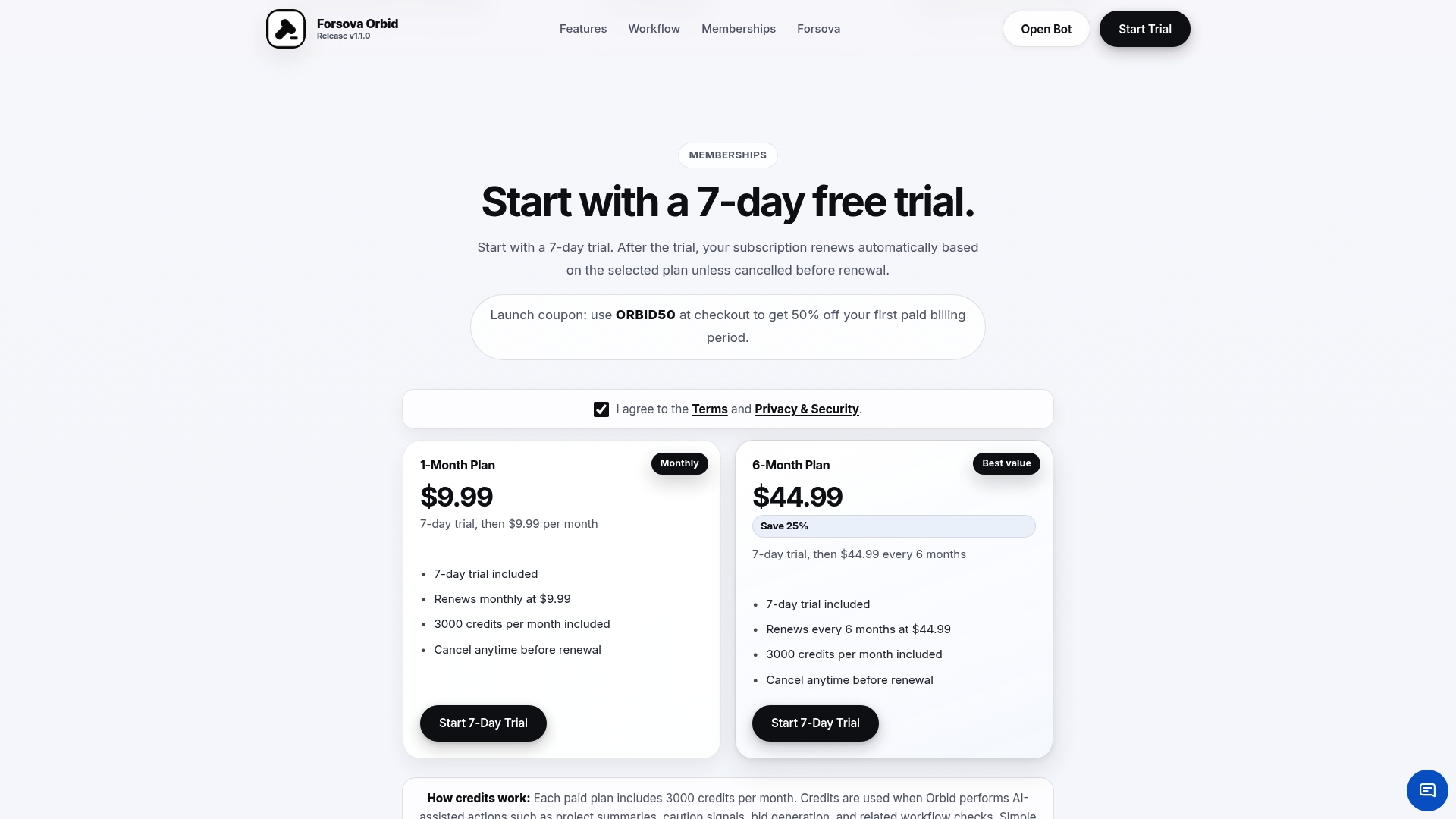
Forsova Orbid is a Telegram-based tool built for freelancers on Freelancer.com. It filters out low-quality projects before you spend time writing a proposal, shows live bid counts so you know how competitive each opportunity is, and flags AI-detected caution signals on projects that show ghosting risk patterns. Freelancers who use Forsova Orbid spend less time on dead-end bids and more time on projects where clients are engaged and ready to hire. Better lead selection at the start is the simplest way to reduce ghost project exposure across your entire pipeline.
FAQ
What is a ghost project in freelancing?
A ghost project is a freelance engagement where a client initiates contact or work and then stops communicating entirely. The freelancer is left with incomplete work, unpaid time, or both.
How common is ghosting in freelancing?
Approximately 60% of freelance proposals receive no response, making proposal ghosting the most frequent form of client ghosting freelancers encounter.
How do you protect yourself from ghost projects?
Use a signed contract with kill fee clauses, collect an upfront deposit, define clear milestones, and maintain a double pipeline of leads so one ghost project does not derail your income.
What should you do when a client ghosts you mid-project?
Stop all work immediately, document every communication attempt, and follow a structured escalation: friendly reminder, firm follow-up, formal demand letter, and small claims if needed by day 60.
Does ghosting mean the client thought your work was bad?
No. Ghosting reflects client avoidance of difficult conversations like budget problems or internal cancellations, not a judgment on the freelancer’s quality or performance.